S386 Twitter

If Trump signs the bill, it will end nationality discrimination in Green Card allocation.
In a huge relief for tens of thousands of Indian nationals currently stuck in Green Card limbo, the United States Senate passed the “Fairness for High-Skilled Immigrants Act, or S.386, Wednesday evening.
The bill, better known as S.386, increases the per-country cap on family-based immigrant visas from the current 7 percent of the total number of such visas available in a particular year to 15 percent. Among other things, it also has provisions to:
S386 Twitter Am22
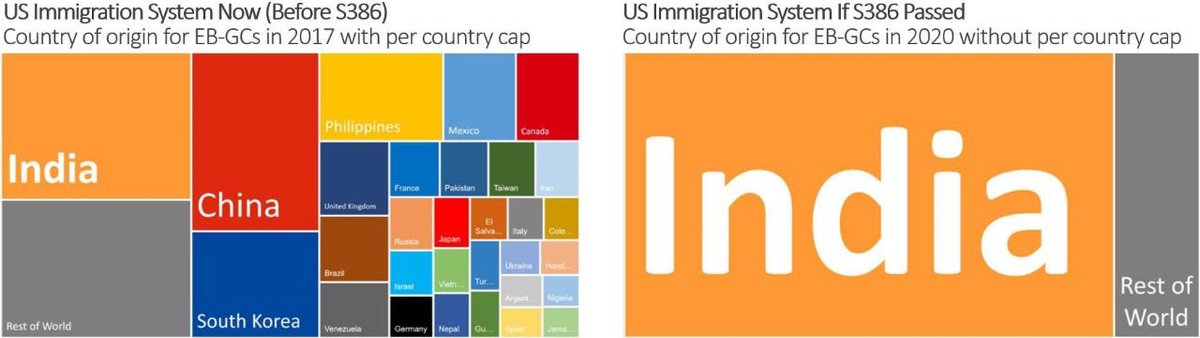
- eliminate the present 7 percent cap for employment-based immigrant visas.
- remove an offset that reduced the number of visas for individuals from China.
- establish transition rules for employment-based visas from fiscal year 2020 to 2022, by reserving a percentage of EB-2 and EB-3 visas for individuals not from the two countries with the largest number of recipients of such visas. EB-2 visas are used by workers with advanced degrees or exceptional ability, while EB-3 are for skilled and other workers. (The two countries with the largest recipients of such visas are India and China.)
- Of the unreserved visas, not more than 85 percent will be allotted to immigrants from any single country.
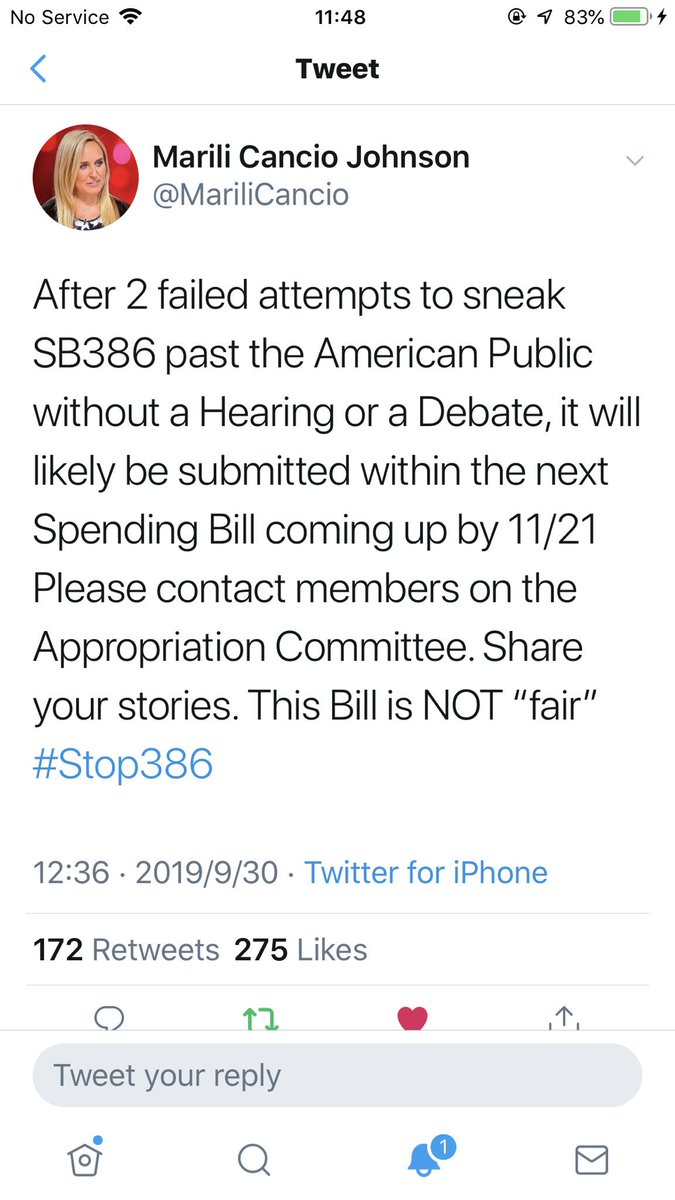
Senator Cory Bookers office meet on # S386: New Jersey Members Advocating for #S386 in Newark Booker's office on 10/17: Our members told excellent story and presented One pagers, research articles, presentations in the Newark office.New Jersey team have told their stories and represented the backlog community really well, how it impacts to them, their families and the kids, despite being. Immigration Voice, San Jose, California. 36,529 likes 36 talking about this. A national non-profit organization working to foster American innovation & alleviate the problems faced by legal. Once again, Sen. Mike Lee (R-Utah) asked for unanimous consent from the Senate this week to pass the Fairness for High Skilled Immigrants Act, S. 386 in the Senate and H.R. 1044 in the House, that would lift per-country caps for employment-based green cards, but Sen. Dick Durbin (D-Ill.) objected. Durbin used his objection to introduce new legislation, the RELIEF Act, which would. The latest tweets from @immivoice. S386 makes the system First Come First Serve. Doctors, Scientists, Engineers etc have an estimated wait time of 50 years for Greencard just because they were.
The US House of Representatives passed the companion bill H.R. 1044 in July 2019. But in the Senate, Illinois Sen. Dick Durbin has been blocking it.
RELATED: Is Indians Green Card backlog limbo about to end? (December 3, 2020)
In the Senate, the bill was championed by Sen. Mike Lee, a Republican from Utah.
To get the support of Durbin and other critics, a few amendments were made to S.386.
House and Senate leaders will now have to reach a compromise on their differences. The final nod to the bill has to come from President Donald Trump. So far the White House hasn’t given any indication about whether the president will sign the bill or veto it.
S386 Unanimous Consent
The bill’s supporters celebrated the victory on social media.
“Where there’s a will, there’s a way! #S386 finally passes the senate!! Congratulations everyone! We did it!!!” Skilled Immigrants in America, a nonprofit group that advocate “fairness for Americans-in-waiting.”
Where there’s a will, there’s a way!#S386 finally passes the senate!!
Congratulations everyone! We did it!!! pic.twitter.com/Vt7fbp6pg8
— SIIA.US (@SIIA_US) December 2, 2020
The organization also thanked Lee, Durbin, Sen. Rick Scott, R-FL, Sen. Tim Cottom, R-AR, and Vice President-elect Kamala Harris.
However, some immigration experts have tried to temper the expectation, especially because of major differences between the Senate and House bill, which have to be reconciled and voted again.
“Happy that S. 386 has finally passed in the Senate and we’re a step closer to ending nationality discrimination in the visa allocation system,” Memphis, TN, -based immigration lawyer Greg Suskind tweeted.
Happy that S. 386 has finally passed in the Senate and we're a step closer to ending nationality discrimination in the visa allocation system. 1
— Greg Siskind (@gsiskind) December 2, 2020
In a following tweet, he wrote: “Given the late stage here, I would suggest people temper their expectations. Not at all clear what the House thinks about this and how much room there is to tweak if there are changes demanded. Also, we have a President likely to veto anything that is not 100% to his liking.”
Given the late stage here, I would suggest people temper their expectations. Not at all clear what the House thinks about this and how much room there is to tweak if there are changes demanded. Also, we have a President likely to veto anything that is not 100% to his liking. 4
Hr1044 S386 Twitter
— Greg Siskind (@gsiskind) December 2, 2020
RELATED POSTS:

The newly passed H.R.1044 raises caps for family-based green cards(July 10, 2019)
Trump talks about changes in H-1B Visa, including a possible citizenship(January 11, 2019)
Trump’s tweet on H-1B and path to citizenship evokes lukewarm response (January 12, 2019)
Waiting for the Wait to End: The human face of Indian immigrants caught in the Green Card backlog (December 4, 2018)
S386 Bill Latest Updates News
H-4 and H-1: Time for Indian immigrants to speak up on immigration policy, says author Amy Bhatt(January 5, 2019)
High-skilled Indian workers, DALCA kids, rally on Capitol Hill to clear green card backlog(June 15, 2018)
Reverse brain drain – the experience of three couples who moved back to India from the US(January 20, 2014)